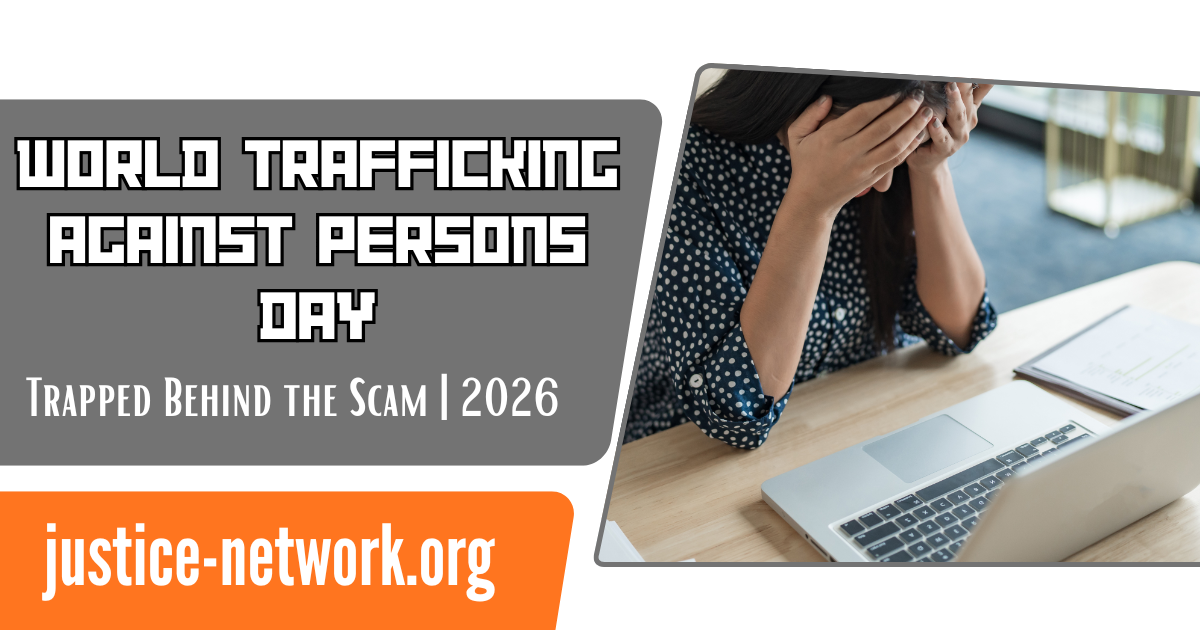
Every year there is a theme or a focus put out by The United Nations for sharing about the problems with human trafficking specifically for World Trafficking Against Persons Day, which is on July 30th. This year’s focus is on the problems of scams of getting people into fraud operations. It is not something that is talked about too often when you think about human trafficking (specifically labor trafficking).
What does fraud have to do with human trafficking? Let’s look at the steps the UN states:
1. Advertisements are put out to give promises of amazing jobs in another country that don’t actually exist. A person will look at the pros and cons for why perhaps they should take the job. They know it might be hard to be away from family and friends and even to be around a language they may not know well, but the money seems too good to be true to pass up. They themselves get scammed into a lie.
2. There are scam compounds. These people who respond to the scams end up getting transported to online fraud operations.
3. Scam companies train these people so they can scam others. This is called Cyber-Enabled Fraud. Once trained, they will then have to be forced to convince people into romance scams, crypto scams, sweepstakes scams, and more.
4. When these people don’t reach a certain quota or are unable to receive the money they are told to, they can become indentured with bonded debts, can be harmed physically, be kept under watch, and more all as a part of coercion. Amnesty International has also reported human trafficking, abuse, and torture inside Cambodian scam compounds.
Perhaps you have received scam calls or texts and didn’t realize that the person on the other end may be forced to do what they are doing even though they have to do what was done to them (due to threats and violence causing them to not follow-through). They are living in fear and have to use tactics to gain your resources. This is such a big business now that there is an estimate from these organized crimes in East & South Asia alone of $18-37 billion from people who have been targeted by scams (statistic from 2023, $10 bill estimated in 2025).
Cybercrime has grown so much, especially since COVID. It is important for us to know that these scams are growing larger each day, but the people who are caught up in them on the other side feel trapped and want to get out as much as we don’t want to be trapped and caught into financial losses or more. There have been taskforces trained to pinpoint the problems and help those people who are trafficked while also spreading awareness in the areas where these people are misled. Be careful which links you click on, what texts you respond to, what calls you agree to continue, and never give out your personal information to anyone even if they seem like a legitimate company. In doing so, you may be adding to the problem of traffickers targeting more people to be forced into labor trafficking in this way.
Spread the news about this “Trapped Behind the Scam” information when thinking about World Trafficking Against Persons Day!
Here’s a great free webinar you can join by LifeWay Network where you can learn more (taskforce members, survivor advocates, and human trafficking prosecutors will be speaking at it as well).